
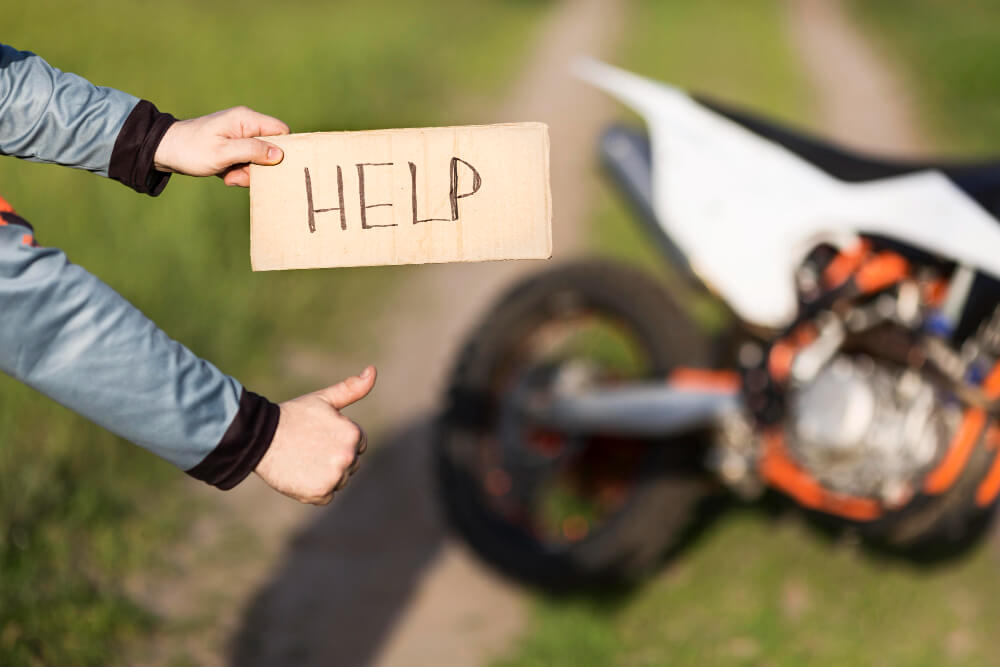
When your motorcycle won’t start or you’ve got to move it unexpectedly, towing can feel like the fastest solution until you realize how easy it is to scuff fairings, bend a lever, or stress a fork. This guide breaks down the most common motorcycle towing mistakes, how they damage bikes, and what to do instead. If you’re stuck in Dallas and need hands-on help moving your bike safely, you can call Premio Towing Company at 1 (469) 269-5499.
The fastest way to avoid damage: choose the right towing method
A lot of towing damage happens before a single strap is tightened, simply because the wrong method was used for the situation.
In general, motorcycles are safest when they’re transported upright with multiple secure points of contact. That’s why a flatbed or a trailer is usually preferred for most breakdowns and long distances. A wheel-lift setup can work in some scenarios, but it’s more sensitive to technique, bike type, and the condition of the tires, suspension, and steering.
One of the biggest red flags is improvised “buddy towing” with a rope, strap, or someone pulling you with a car while you balance the bike. Even at low speeds, this can go wrong fast. Steering gets twitchy, braking distances change, and if the lead vehicle slows suddenly, the rider can go down. It also puts strain on the bike in ways it wasn’t designed for.
If you’re deciding quickly, ask yourself: is this a controlled load onto a stable platform, or am I trying to drag/roll a bike behind something? The second option is where damage and injuries often start.
Motorcycle towing mistakes that cause real damage
These are the mistakes riders most commonly run into when attempting to tow or transport a motorcycle, especially under stress.
Using the wrong tie-down points
It’s tempting to hook straps to whatever is easy to reach, but many “convenient” points are fragile or not meant to take towing loads.
Avoid strapping to:
- Handlebars in a way that twists them or loads the controls
- Mirrors, turn signals, windshields, or fairing brackets
- Luggage racks or saddlebags that can flex or crack
Better tie-down points depend on the bike, but solid structural areas near the front end and frame are typically used, often with soft loops to avoid metal-on-metal contact. When in doubt, your owner’s manual sometimes notes safe transport points, and a professional tow operator will have a routine that avoids cosmetic parts.
Over-compressing the suspension
A common myth is that you should crank the straps down until the suspension is heavily compressed. Too much compression can stress seals, bushings, and components, and it can also make straps loosen later as the bike “settles.”
A better goal is to compress the suspension slightly so the bike is stable, then rely on correct strap angles and redundant tie-downs rather than brute force.
Loose straps that let the bike walk or tip
The opposite problem is straps that are barely snug. When the truck hits bumps or changes lanes, the bike can shift inch by inch, and that’s all it takes for a strap hook to pop free or for the bike to lean into something hard.
If you’re transporting the bike yourself, do a quick stability check after you tighten everything: the bike should feel planted, not springy or swaying.
No wheel chock or poor wheel positioning
The front wheel is the anchor for most motorcycle transport setups. Without a wheel chock, the bike can roll forward or sideways, and then the straps become the only thing keeping it upright.
Even if you don’t have a chock, you should still position the bike so the front tire is braced against something solid, centered, and straight. A turned front wheel makes the whole load less stable.
Towing with the bike leaning on the side stand
The side stand is designed for parking, not for stabilizing a bike during transport. If the bike leans onto the stand while being strapped down, you can bend the stand, damage its mount, or shift the bike in a way that loosens straps.
During transport, the bike should be upright and supported by the platform and tie-downs, not by the stand.
Loading at the wrong angle or dragging the bike
Scraped pipes, dented headers, and cracked lower fairings often happen during loading, not while driving.
Steep ramps, poor traction, and misaligned approaches can cause:
- The bike to bottom out
- The front tire to slip sideways
- A helper to lose grip and drop the bike
If the ramp angle looks aggressive for your bike’s ground clearance, pause and rethink the setup.
Ignoring low-clearance contact points
Sport bikes and many modern bikes have low bodywork, belly pans, and exposed components that can contact a ramp or bed edge. Cruisers can have low exhaust and long wheelbases that increase the chance of scraping.
A quick scan before loading helps: identify what could hit first if the bike transitions from ramp to flatbed.
How to secure a motorcycle correctly (practical basics)
You don’t need a perfect “showroom” setup, but you do need a stable strategy. The basics below are meant for transporting a motorcycle on a flatbed or trailer.
Gear checklist
If you’re doing any DIY transport, a few items make a big difference:
- Quality ratchet straps in good condition
- Soft loops to prevent scratching and improve grip on round parts
- A wheel chock or a solid front wheel brace
- A ramp rated for the weight of your bike
- Gloves for grip and to protect your hands
Avoid frayed straps or bent hooks. Wet straps and dusty hooks can slip more easily, so keep that in mind if you’re loading after rain.
Step-by-step tie-down strategy (simple and reliable)
- Load straight and center the bike. Keep the bike upright and the front wheel pointed forward.
- Stabilize the front first. Attach soft loops and run two straps forward and down to create a stable “V” that holds the bike upright.
- Add rear support. Use two additional straps at the rear to prevent the back end from bouncing or stepping sideways.
- Set tension to “snug and stable.” You want enough compression to prevent rocking, but not so much you’re crushing the suspension.
- Secure loose strap tails. Flapping straps can slap paint and bodywork for miles.
A good rule is redundancy: if one strap loosens slightly, the bike should still stay upright.
Quick shake test and an early re-check
Once strapped, give the bike a firm shake at the bars and seat area. You’re not trying to topple it, just confirming it doesn’t sway or shift.
Then re-check after a short distance. Straps can settle as the bike finds its resting position. This is especially true on heavy bikes.
Special situations that change the risk
Not every motorcycle behaves the same when you tie it down.
Heavy touring bikes, cruisers, and baggers
These bikes are heavy and often top-heavy at slow speeds. They can be very stable once properly secured, but loading them requires control. Ramp strength, traction, and enough hands matter. A small slip while pushing can become a full drop.
Sport bikes with delicate fairings
Sport bikes often have bodywork and clips-ons that can be expensive to repair. Tie-down placement needs extra care to avoid rubbing or stressing fairing brackets. Ground clearance during loading is also a bigger concern.
Scooters and small bikes
Smaller bikes can shift more easily because they weigh less, and their body panels may be more “plastic heavy.” They still need proper tie-down points and protection from strap abrasion.
After an accident
If the bike has been in a crash, don’t assume normal tie-down points are safe. Bent forks, damaged wheels, leaking fluids, and broken controls can change how the bike should be handled. In these cases, avoiding extra damage and keeping everyone safe is usually easier with professional help.
What to do if you’re stranded and need a tow
If your bike dies on the roadside, your first job is not the bike. It’s the scene.
Get yourself out of traffic and into a visible, safer position. Turn on hazard lights if your bike has them, and use reflective gear if you carry it. If the bike is in a dangerous spot, don’t put yourself at risk trying to push it across lanes.
When you contact a tow provider, it helps to share details that affect the safest transport plan:
- Motorcycle make/model or at least the type (cruiser, touring, sport, scooter)
- Approximate weight category (small vs heavy)
- Whether the bike rolls and steers normally
- Any crash damage, leaks, or locked wheel
- Your exact location and whether access is tight (garage, alley, gated lot)
That information helps avoid the very motorcycle towing mistakes that happen when someone arrives without the right plan.
When it’s safer to call a motorcycle towing pro
DIY transport is most likely to go wrong when you’re rushed, short on equipment, or dealing with a heavy bike. It’s also riskier when you’re on the shoulder of a highway or in fast traffic where loading is dangerous.
If you’re unsure about tie-down points, don’t have a chock, or you’re worried about scraping bodywork while loading, calling a professional is often the cheaper option compared to repairing damage from a drop.
For riders in Dallas who need help moving a disabled bike, Premio Towing Company can be reached at 1 (469) 269-5499.
Quick recap: a damage-prevention checklist before any tow
Before your bike goes anywhere, double-check:
- The towing method fits the situation and the bike’s size
- You’re not using fragile parts as tie-down points
- The bike is upright, centered, and the front wheel is braced
- Straps are snug, angled correctly, and secured at front and rear
- Nothing is rubbing paint, fairings, lines, or cables
- You re-check tension shortly after starting the trip
Most motorcycle damage during towing is preventable. The key is choosing a stable transport method and avoiding rushed shortcuts. If you’re in a tough spot or the setup feels questionable, give us a call at Premio Towing Company at 1 (469) 269-5499, and we’ll help you get your bike moved without turning a breakdown into a repair bill.


