
A tire that keeps losing air is usually leaking from one of a few places: a small tread puncture (nail or screw), the valve stem or valve core, the bead where the tire seals to the rim, or the rim itself after a pothole or curb hit. The safest move is to treat repeat air loss as a real leak until you prove otherwise with a pressure check and a quick inspection, because driving on low pressure can ruin the tire and sometimes the wheel. If you’re dealing with a recurring flat in an unsafe spot or you can’t get the tire to hold air long enough to reach a shop, Premio Towing Company can help arrange mobile flat tire assistance. You can reach them anytime at 1 (469) 269-5499 while you work through the steps below.
Quick checks that save time (and help you avoid tire damage)
If you only do three things, do these:
- Check the pressure with a gauge (cold tire) and note the PSI.
- Recheck in a few hours or the next morning. A drop of several PSI points to a leak, not “normal.”
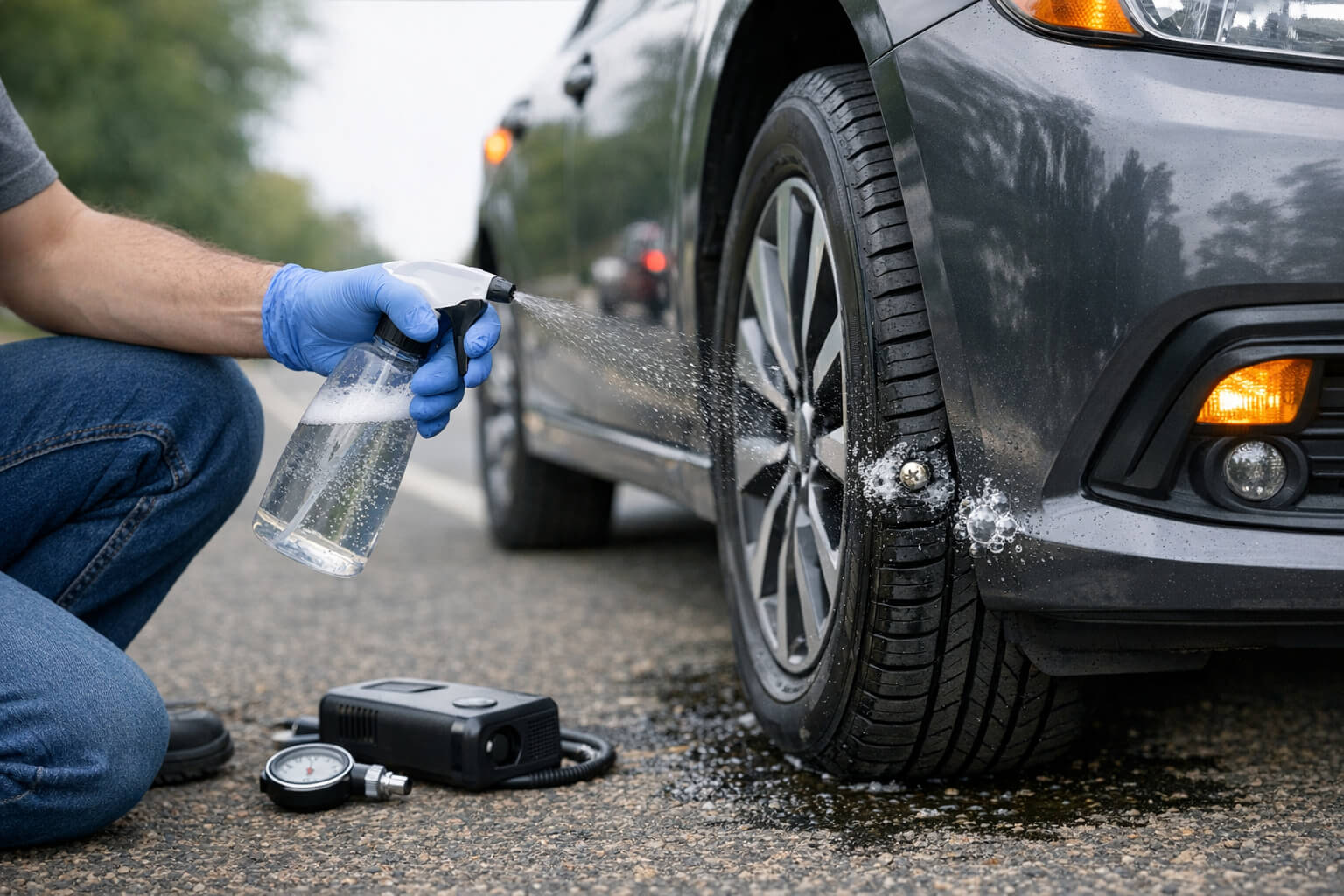
- Do a fast soapy-water test around the tread, sidewalls, and the valve stem. Bubbles show you where air is escaping.
If the tire is very low, the vehicle feels unstable, or you see a bulge or sidewall damage, avoid driving it further. Even short distances at low pressure can turn a simple repair into a replacement.
First steps before you drive much
Air loss patterns tell you a lot. A tire that drops from normal pressure to noticeably low overnight usually has a puncture, valve leak, or bead leak. A tire that goes flat within minutes often has a larger puncture, a damaged valve stem, or a rim problem that suddenly worsened.
Start with a quick walkaround:
- Look for a nail/screw in the tread or anything shiny embedded.
- Check the sidewall for cuts, a bubble, or a spot that looks pinched.
- Look at the valve stem for cracking or bending, and make sure the cap is present.
- If the tire is nearly flat, look at the wheel edge for signs you hit something recently: scuffs, bends, or fresh marks.
Confirm the leak with soapy water
Mix dish soap with water (or use a spray bottle). Inflate the tire enough to hold shape if you can, then spray:
- The tread surface and shoulders
- The sidewalls (both sides)
- The valve stem and valve core area
- The bead area where the tire meets the rim on both sides
Bubbles that grow steadily are your leak. Mark the spot with chalk or tape so you can show a shop exactly where to look.
Tread punctures: the most common cause of repeat flats
Most repeat flats come from a small puncture in the tread that leaks slowly. Nails and screws can be sneaky because they sometimes act like a plug until the tire flexes while driving, then the leak becomes more obvious.
Where the puncture is located matters more than people realize:
- Center tread punctures are often repairable if the hole is small and the tire wasn’t driven flat.
- Shoulder and sidewall punctures are usually not safe to repair because the tire flexes heavily there and repairs don’t hold reliably.
If you see a nail or screw and the tire is still holding some air, leaving it in place until a shop inspects it often helps. Pulling it out can turn a slow leak into a fast one, and you may end up stranded.
Valve stem or valve core leaks (quiet, common, and easy to miss)
A lot of drivers expect a puncture, but the leak is sometimes at the valve. There are two common valve-related culprits:
- Valve core: the tiny screw-in part inside the stem can loosen or fail.
- Valve stem: the rubber stem can crack with age, heat, and exposure, or get damaged during inflation.
Valve leaks often show up as a tire that loses a few PSI every couple of days, or a tire that’s fine for a while and then suddenly won’t hold air.
Soapy water is the quickest confirmation. Spray the valve tip and the base of the stem. If you see bubbles at the tip, the core may be loose or failing. If bubbles appear at the base, the stem itself may be cracked or not sealing properly.
Valve core replacement is quick and inexpensive, but a stem replacement requires removing the tire from the rim. A shop can handle both, and many will recommend new stems when mounting new tires because they’re cheap insurance against repeat leaks.
Bead leaks: when the tire won’t seal to the rim
Bead leaks happen at the edge where the tire contacts the wheel. They can be frustrating because the tread looks perfect and there’s no obvious puncture, yet the tire still keeps going low.
Common reasons include:
- Corrosion on the rim that prevents a tight seal
- Dirt or debris trapped at the bead
- A tire that wasn’t seated cleanly during mounting
- Long periods of underinflation, which can disturb the seal
You’ll often see bubbles appear around the rim edge during a soapy-water test. The fix typically involves removing the tire, cleaning the sealing surface, and reseating it. Sometimes a bead sealer is used, depending on the wheel condition.
Bent or cracked rim after potholes or curbs
If your tire started losing air shortly after a pothole hit or curb impact, the wheel itself may be part of the problem. A small bend in the rim lip can create a slow leak at the bead. In other cases, an alloy wheel can develop a crack that leaks intermittently.
Clues that point toward wheel damage include:
- The leak began right after a hard impact
- The tire loses air even after a repair attempt
- You notice vibration or a steering pull that wasn’t there before
- Bubbles appear at one spot on the rim edge, especially near a visible scuff or bend
A shop can check wheel runout and inspect for cracks. Some bends can be repaired, but safety depends on how severe the damage is and where it’s located.
Sidewall damage and bulges: treat these as urgent
Sidewall problems are different from tread punctures. The sidewall flexes with every rotation and carries load, so damage there can lead to a sudden failure.
Replace the tire rather than trying to “make it work” if you notice:
- A bulge or bubble on the sidewall
- A cut or tear in the sidewall
- Exposed cords or deep scuffing
- The tire was driven significantly while low or flat
Sealants are especially risky here. They might slow the leak briefly, but they don’t restore structural integrity.
When a previous repair fails (or the wrong repair was used)
A tire that starts leaking again after it was “fixed” may have:
- A repair placed too close to the shoulder
- A plug-only repair that didn’t seal well
- Multiple punctures close together
- A different leak that wasn’t caught the first time (valve, bead, rim)
If the tire was recently repaired and still won’t hold air, it’s worth returning to the shop promptly. A proper inspection should include the repair area, valve, and bead on both sides. Many repeat-flat situations come down to a second leak that was present all along.
Tire pressure light vs a real leak (and why temperature can confuse things)
Temperature changes can make a tire look “low” even when nothing is punctured. Tire pressure naturally drops in colder weather and rises as tires warm up while driving. That’s why you might see a warning light on a cold morning and then watch it disappear later.
This matters because it’s easy to assume the tire “keeps going flat” when it’s actually normal seasonal pressure change. A simple way to tell the difference is consistency:
- If you inflate to the door-jamb PSI and it’s low again the next morning by several PSI, you likely have a leak.
- If all four tires are low by a similar amount after a big temperature drop, you may just need to top them off.
Checking pressure when the tire is cold gives you the most accurate baseline.
Repair vs replace: knowing what a shop will recommend
A tire is usually a good candidate for repair when the puncture is small, in the center tread area, and the tire hasn’t been driven on while dangerously low. Many shops prefer a patch-plug combination repair because it seals the inner liner and fills the puncture path.
Replacement is common when:
- The puncture is on the sidewall or shoulder
- The tire shows a bulge or internal damage
- The tread is already near the wear bars
- The tire was driven flat, damaging the inside
- The leak is tied to severe rim damage
If your vehicle is AWD or 4WD, tread depth differences can matter. In some cases, a shop may recommend replacing more than one tire to avoid drivetrain stress, depending on the vehicle and the difference in wear.
When you can’t safely change it yourself
Sometimes the issue isn’t whether you can change a tire, it’s whether it’s safe to do so where you are. Narrow shoulders, heavy traffic, poor lighting, or severe weather make DIY tire changes risky.
If the tire won’t hold air long enough to drive, you don’t have a usable spare, or the roadside conditions are dangerous, arranging professional help can be the safest next step. Mobile flat tire service can help with installing a spare, inflating a low tire so you can reach a repair shop, or transporting the vehicle if the tire or wheel damage is serious.
Keeping it from happening again
Repeat flats are often preventable with a few habits:
- Check tire pressure monthly with a gauge, not just the dashboard light
- After pothole impacts, recheck pressure and inspect the tire sidewall
- Replace valve stems periodically, especially when installing new tires
- Don’t ignore slow leaks. Driving underinflated overheats the tire and shortens its life
Summary
A tire that keeps going flat almost always has a specific leak source: a tread puncture, a valve issue, a bead leak, or wheel damage, with sidewall problems being the most urgent. A gauge reading plus a simple soapy-water test usually reveals where the air is escaping, and that information helps you decide whether a repair is realistic or if replacement is the safer call. If you’re stuck with a tire that won’t hold air, you don’t have a safe place to work, or you need help getting the vehicle to a shop, Premio Towing Company can assist with mobile flat tire situations. Save their number, 1 (469) 269-5499, for the moments when a recurring flat turns into a roadside problem.


